A rebuilt site with no keyword strategy is just a better-looking target for irrelevant traffic. Before a single word of new content was written, every main page was assigned its own keyword cluster — mapped using SEMrush and SEMrush Academy’s keyword mapping methodology — to maximize keyword reach while minimizing cannibalization between pages. Here’s the research process behind it, and what it made possible.
Overview
Keyword Research & Mapping
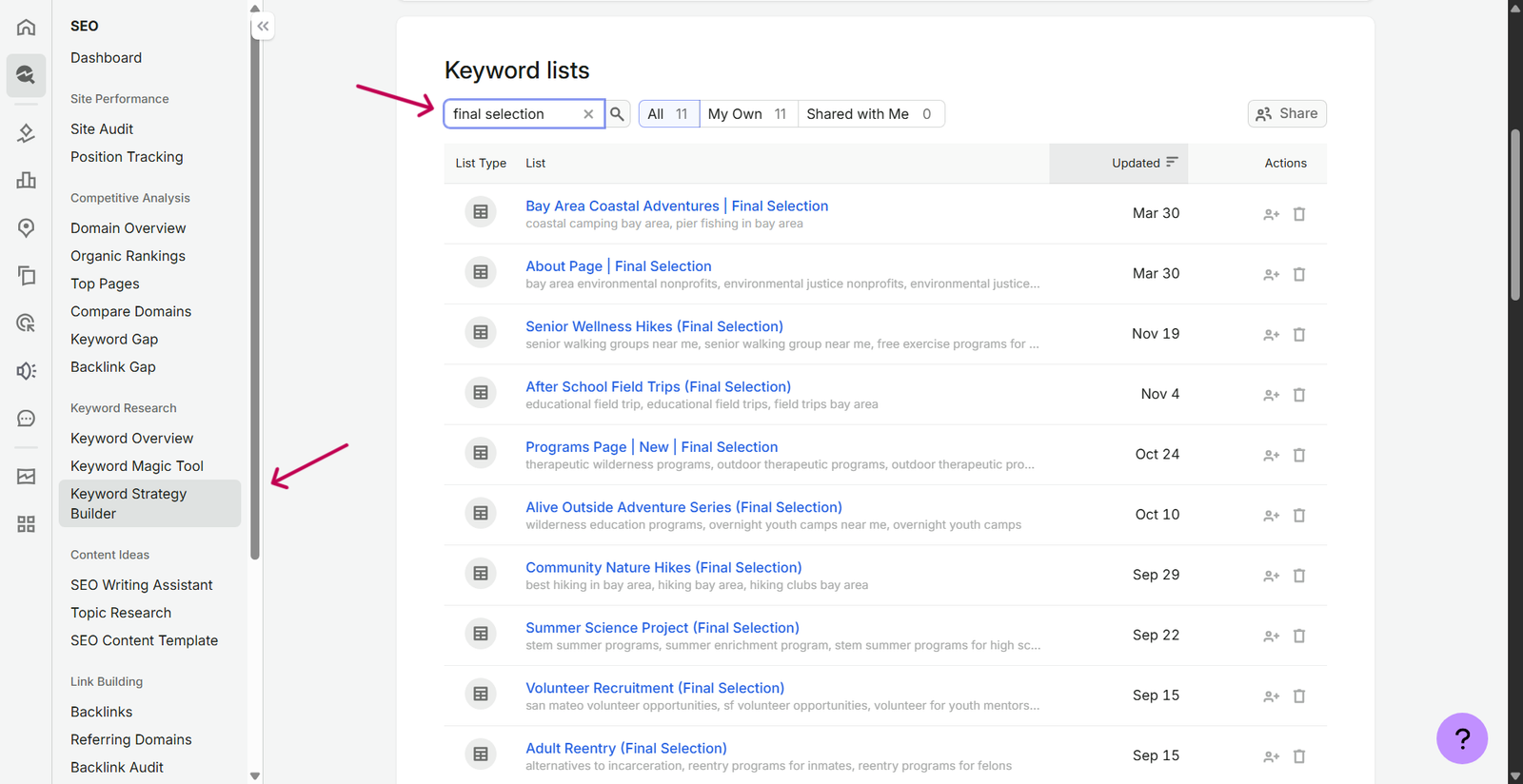
SEMrush research mapped 11 URLs to keyword clusters before a word was written.
FAQ Sections
Every main page given an FAQ section, built from two sources of real search demand.
Content Creation
All main page content rebuilt from scratch around its keyword cluster.
On-Page SEO Fundamentals
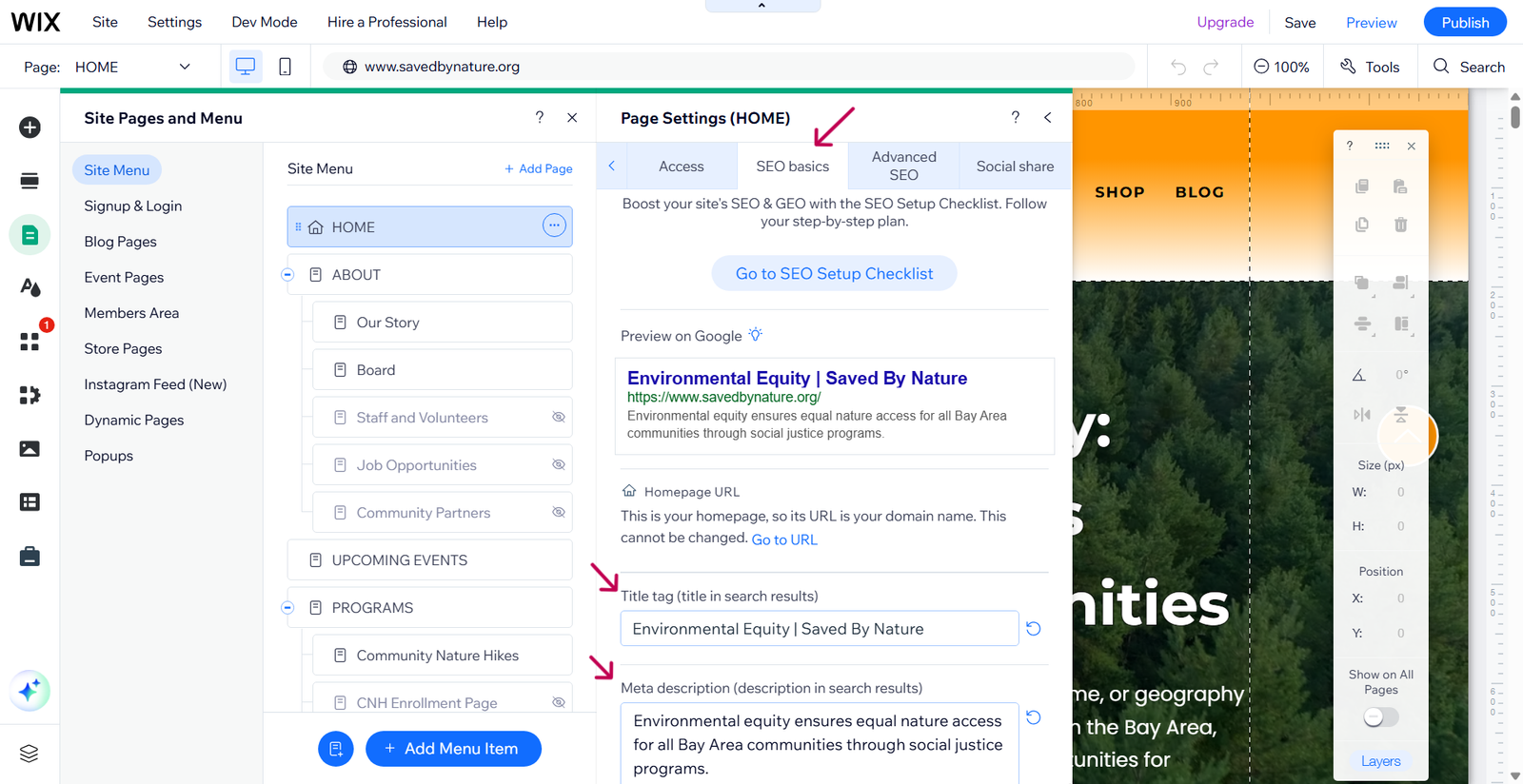
Titles, meta descriptions, and URLs optimized site-wide.
Generative Engine Optimization
Content structured for citation across Google AI Overviews, ChatGPT, Copilot, and Perplexity.
Table of Contents
Keyword research was conducted using SEMrush, following the keyword mapping methodology taught in the SEMrush Academy course. Each main page was built to own a distinct cluster of related keywords — broad enough to capture meaningful search volume, tight enough to avoid competing against other pages on the same site. Every cluster was mapped into a dedicated spreadsheet before a single page was built — the brief that content creation followed.
The goal:
Keyword mapping was conducted across every main page on the site — from the homepage through each individual program page.
The keyword mapping spreadsheet documents the full cluster strategy across all 11 pages. It is kept private to protect SBN’s target keyword strategy — but hiring managers are welcome to request access.
FAQ sections were added to every main page of the site. Rather than writing questions based on assumptions, each FAQ section was built around verified search demand using a two-source research process:
For each page, the primary keyword from that page’s keyword cluster was entered into Google. The “People Also Ask” results were reviewed to identify real questions people are actively searching for in relation to that keyword. The same process was repeated for high-volume secondary keywords in the cluster.

The primary keyword was also used to query ChatGPT — asking “What questions do people ask about [keyword]?” — to surface additional questions not always captured in Google’s People Also Ask results.
The most relevant and high-value questions from both sources were then selected and used to build the FAQ section for each page — ensuring every FAQ directly addressed real audience intent rather than assumed questions.
Each FAQ section serves the following purposes:
All main page content was created from scratch across all 11 mapped pages, based on the keyword research conducted for each. No content from the original site was repurposed — the audit had identified the existing copy as thin, keyword-agnostic, and misaligned with how SBN’s target audience actually searches.
Each page’s content was written to serve two audiences at once:
On-page SEO fundamentals were applied consistently across every main page:
All main page content was optimized not just for traditional search, but for GEO — Generative Engine Optimization. This means structuring content so AI platforms (Google AI Overviews, Copilot, ChatGPT, Perplexity, Claude, etc.) can accurately surface and cite SBN’s programs in AI-generated responses.
GEO optimization shaped content in several ways:
The impact is visible in the results: SBN’s programs now surface in AI-generated overviews across multiple platforms, and enrollments attributed to Google AI Overview, ChatGPT, and Perplexity confirm that visibility is converting to action.
The keyword mapping and content strategy built in this phase became the foundation for everything that followed. Without it: