No Focus Keywords.
No Schema. No Structure.
Every Post, Rebuilt.
SBN’s blog carried multiple H1 tags per post, no assigned focus keywords, and no meta descriptions — whatever visibility it had was accidental. The optimization work addressed every layer: on-page SEO fundamentals, content rewriting for search and AI, structured data implementation, and FAQ sections added to every post — using one of the blog’s strongest performers as the working example throughout.
overview
On-Page SEO
Every post assigned a focus keyword, optimized meta, and alt text.
Structured Data
4 schema types validated per post — zero errors, zero warnings.
FAQ Sections & GEO
FAQ added to every post, built for AI parsability and citation.
Table of Contents
The Starting Point
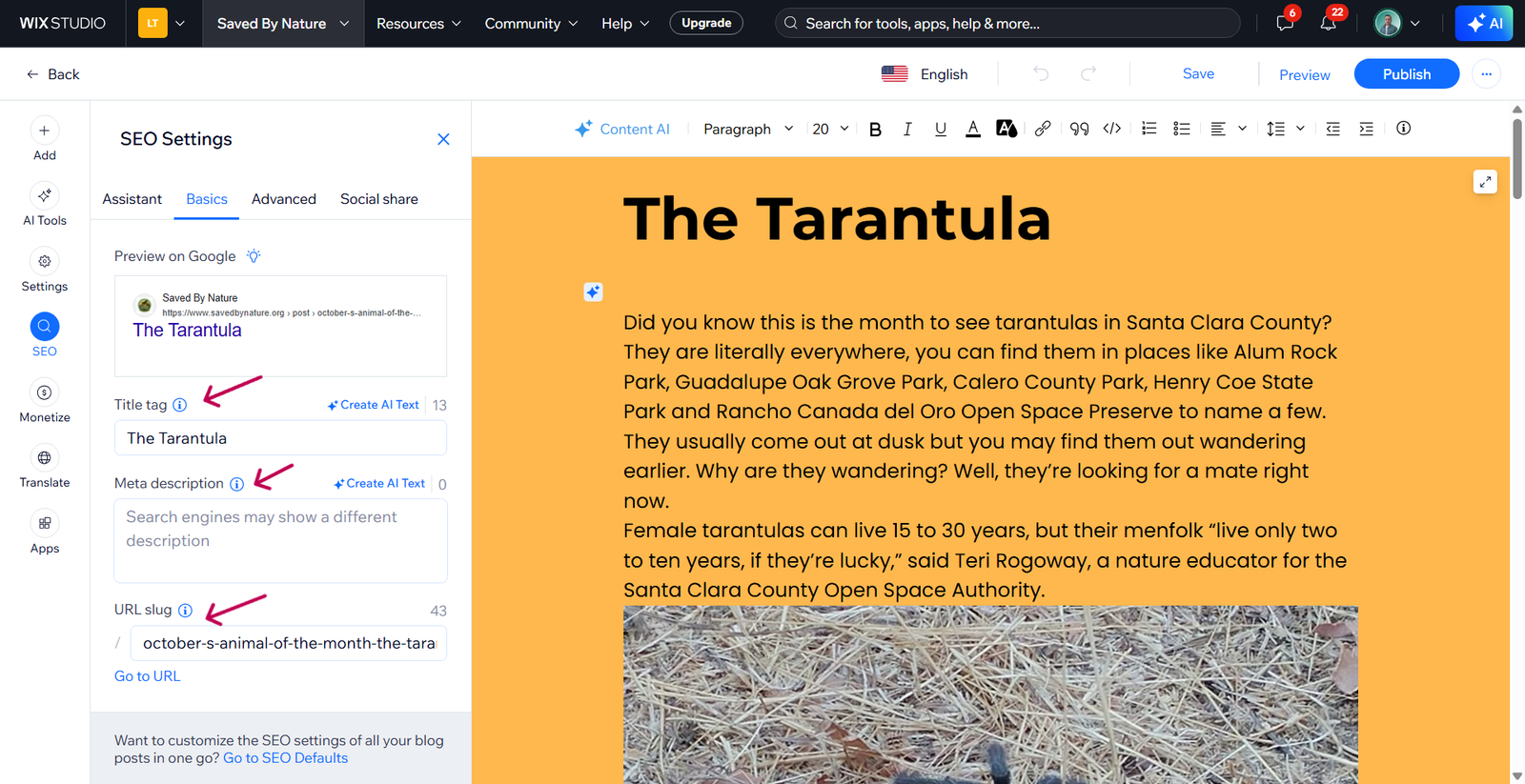
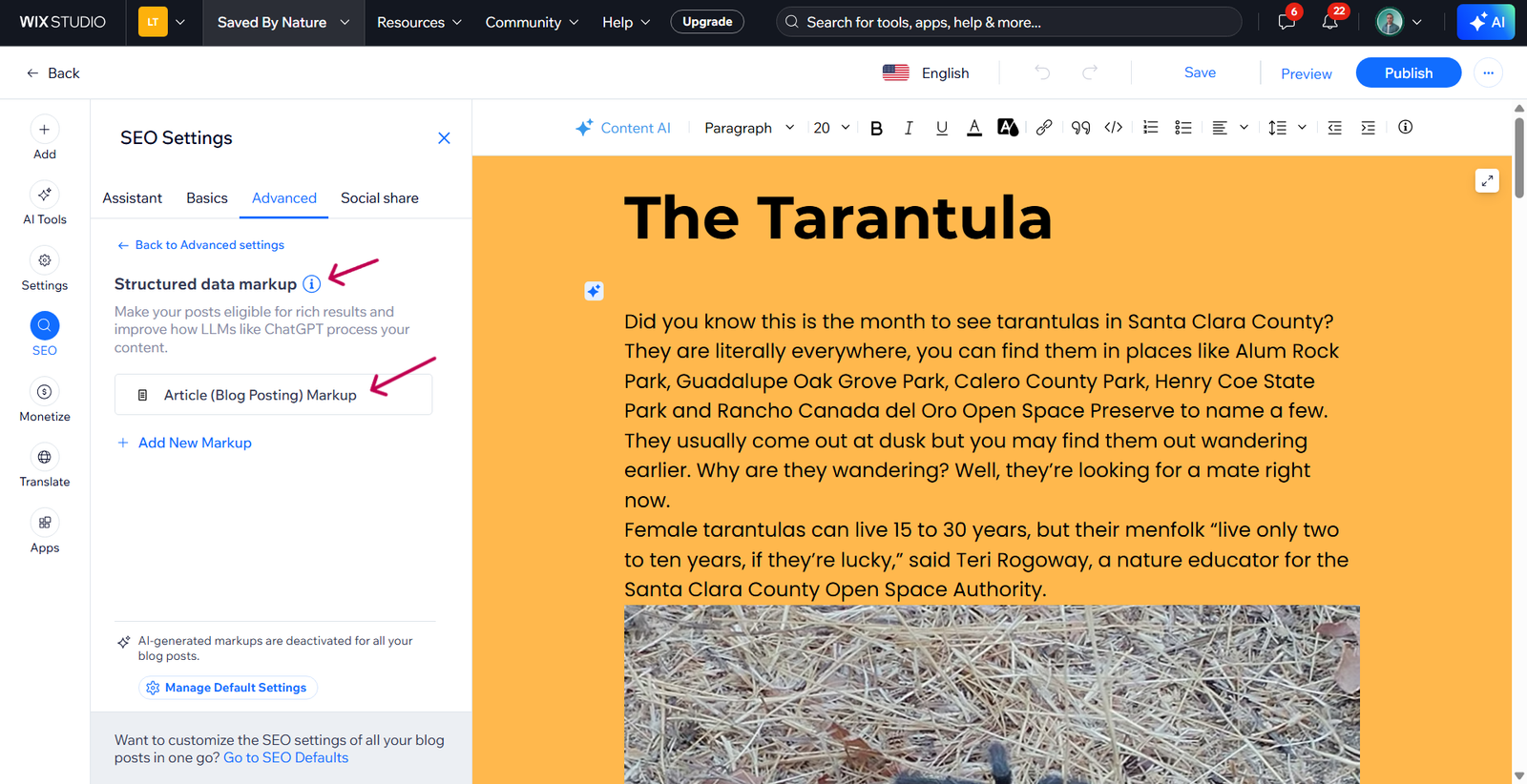
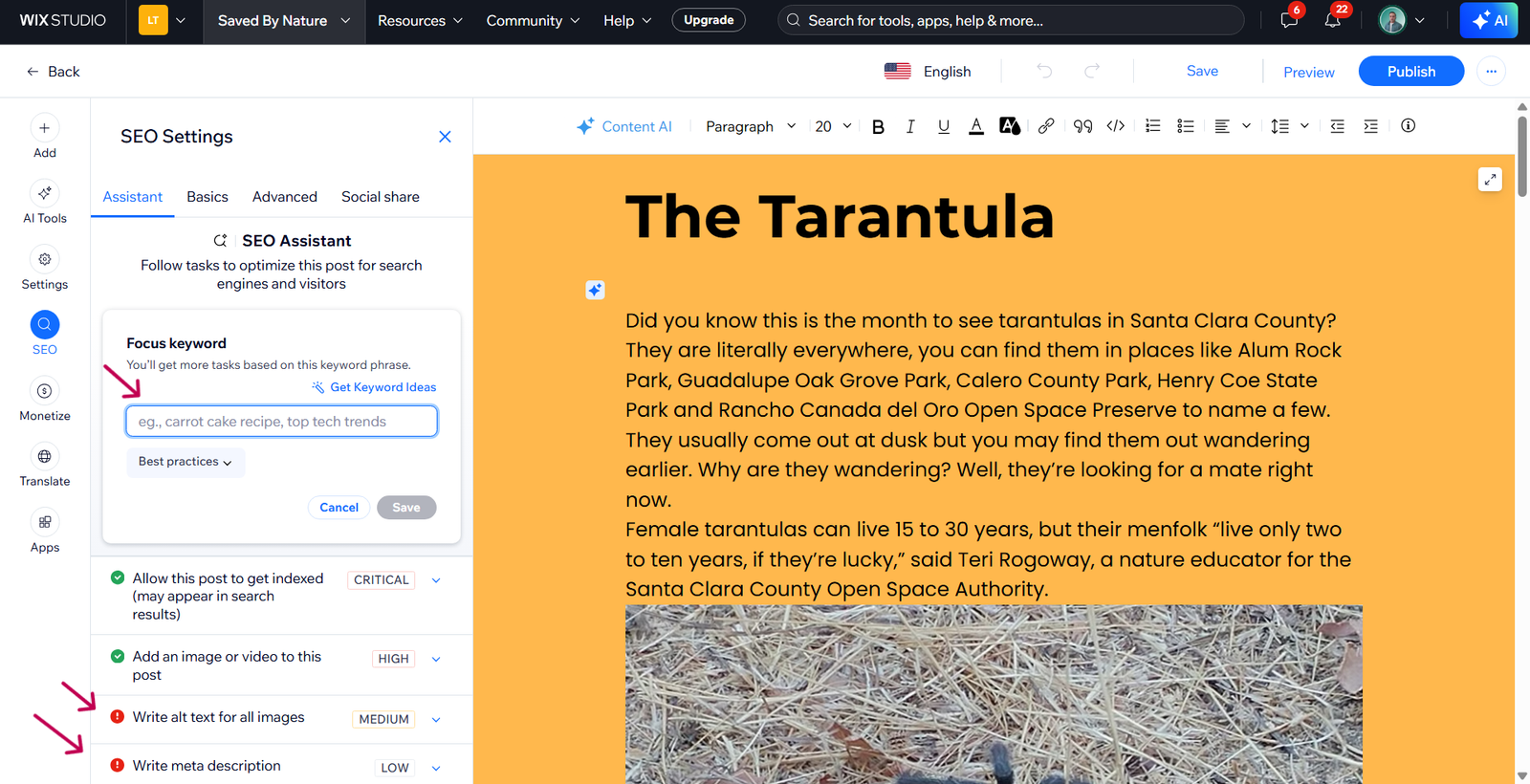
The Tarantula blog post illustrates the baseline state across the majority of SBN’s posts before optimization: no focus keyword assigned, missing image alt text, no meta description written, and only Wix’s default Article structured data in place — with no BreadcrumbList, FAQPage, or additional schema added.
On-Page SEO
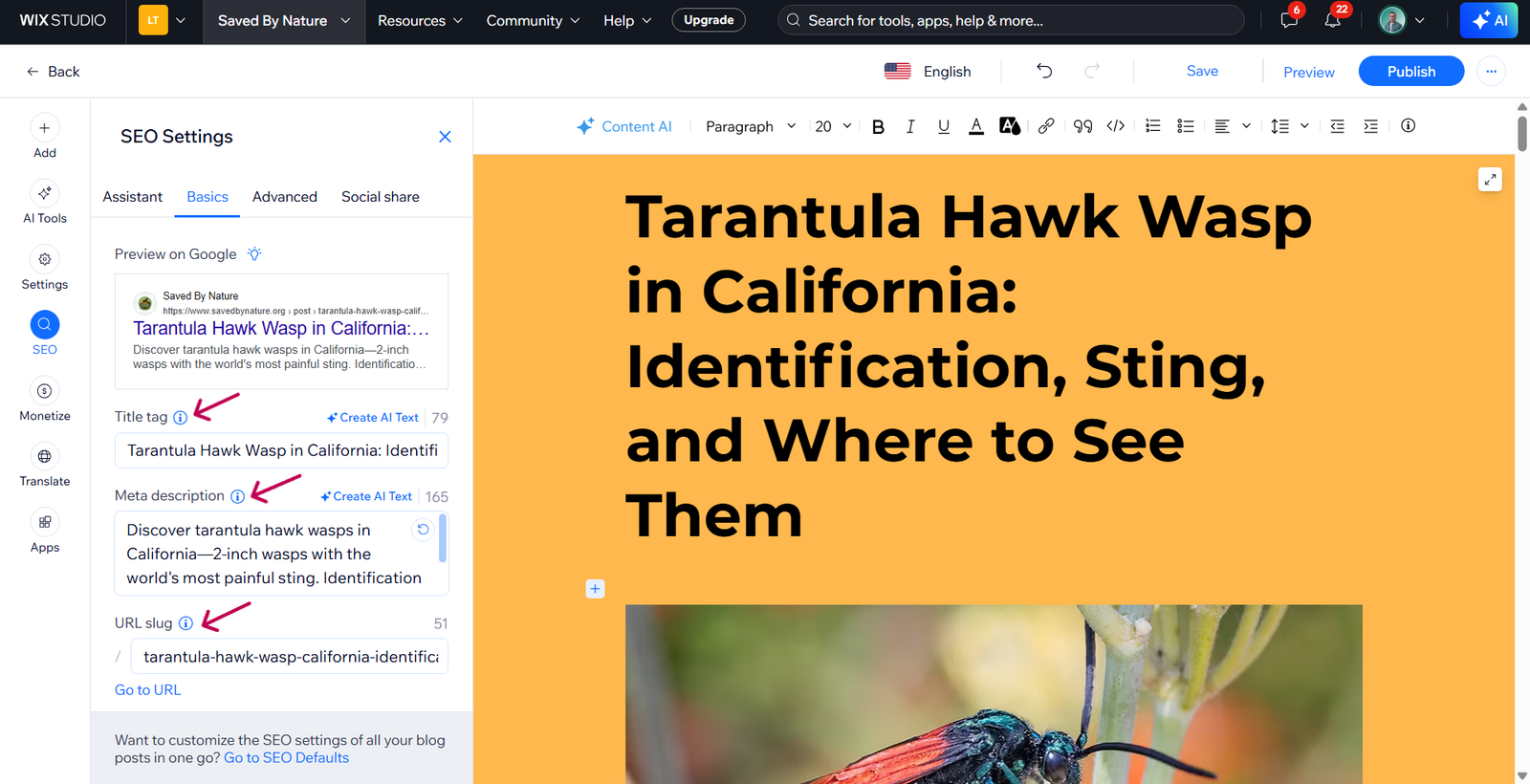
The majority of SBN’s blog posts were rewritten and optimized for both SEO and GEO. Each post was assigned a focus keyword, integrated naturally through the title tag, H1, subheadings, and body copy. Optimized meta descriptions, URL slugs, and image alt text were applied throughout. The blog page itself was added to the main navigation and its styling was brought in line with the rebuilt site’s brand and design.
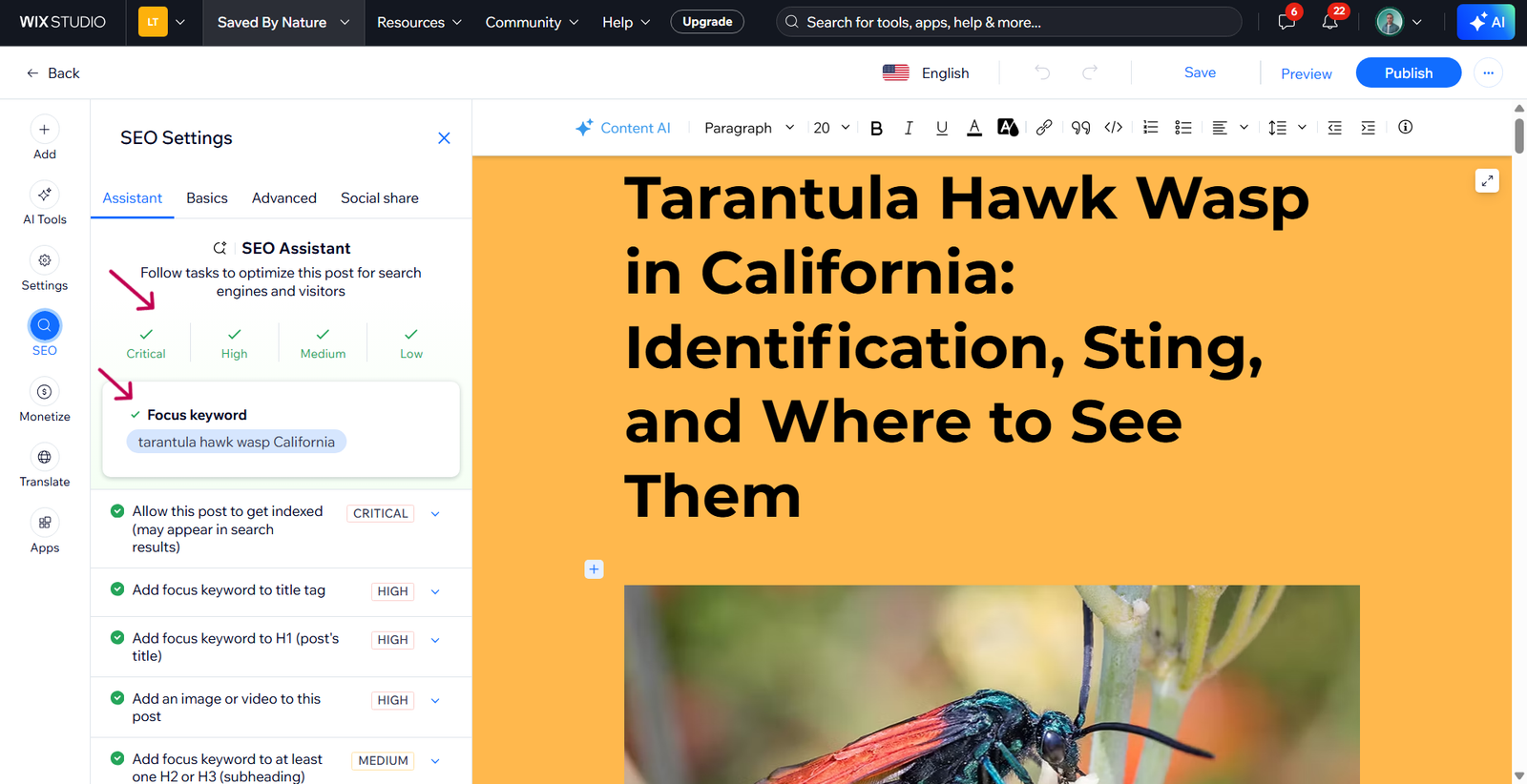
The Tarantula Hawk Wasp identification guide illustrates the after state — it’s also one of the blog’s strongest performers by search impressions, detailed on the results page. All four Wix SEO Assistant priority tiers are complete, with the focus keyword tarantula hawk wasp California assigned and saved.
The title tag, meta description, and URL slug all carry the focus keyword — no generic placeholders, no default Wix-assigned text.
Structured Data
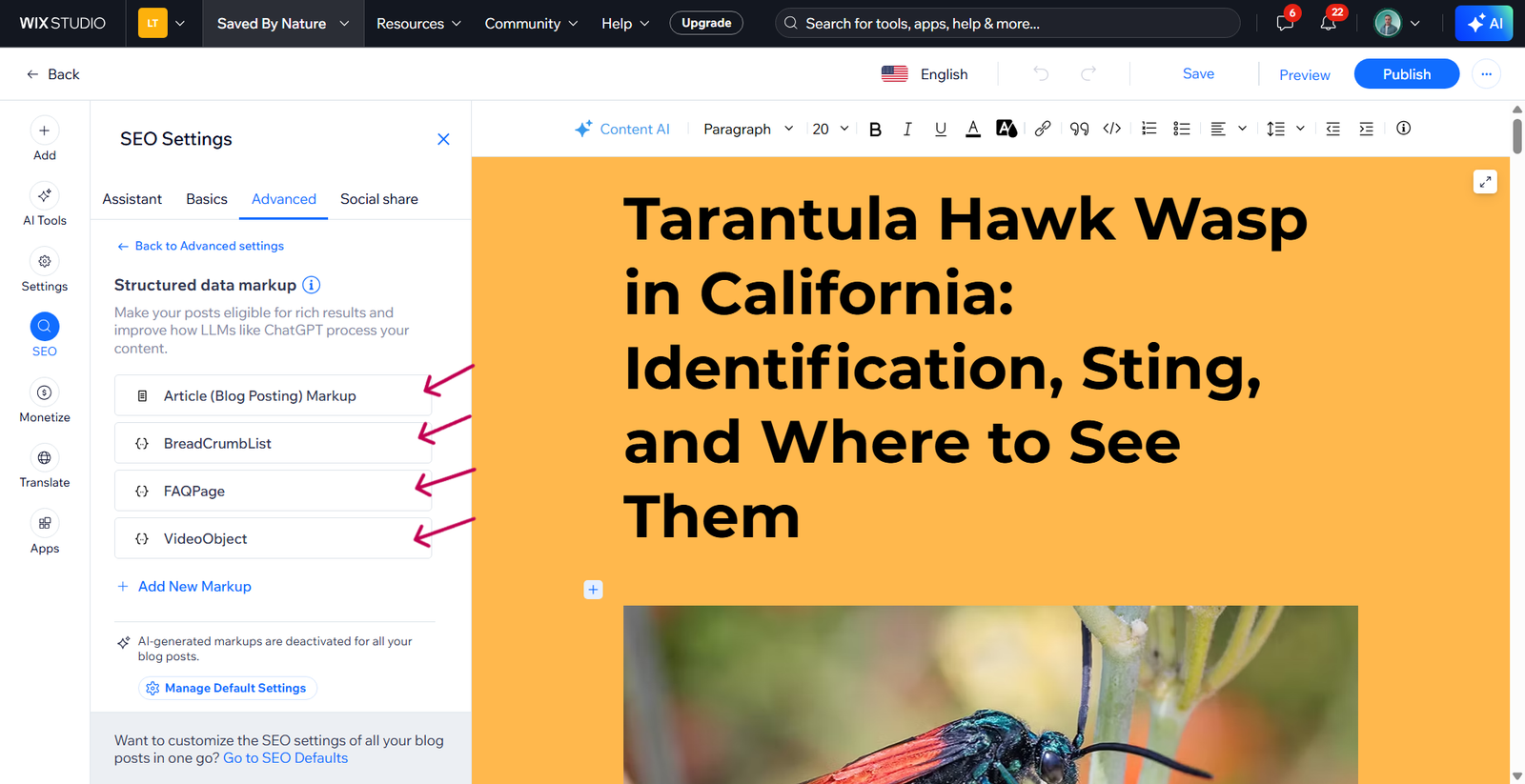
Structured data was implemented across every optimized blog post. Wix applies Article Blog Posting markup automatically — BreadcrumbList, FAQPage, and, where relevant, VideoObject or Person schema were added manually on top of this, making each post eligible for multiple types of Google Rich Results.
The Tarantula Hawk Wasp guide carries four schema types:
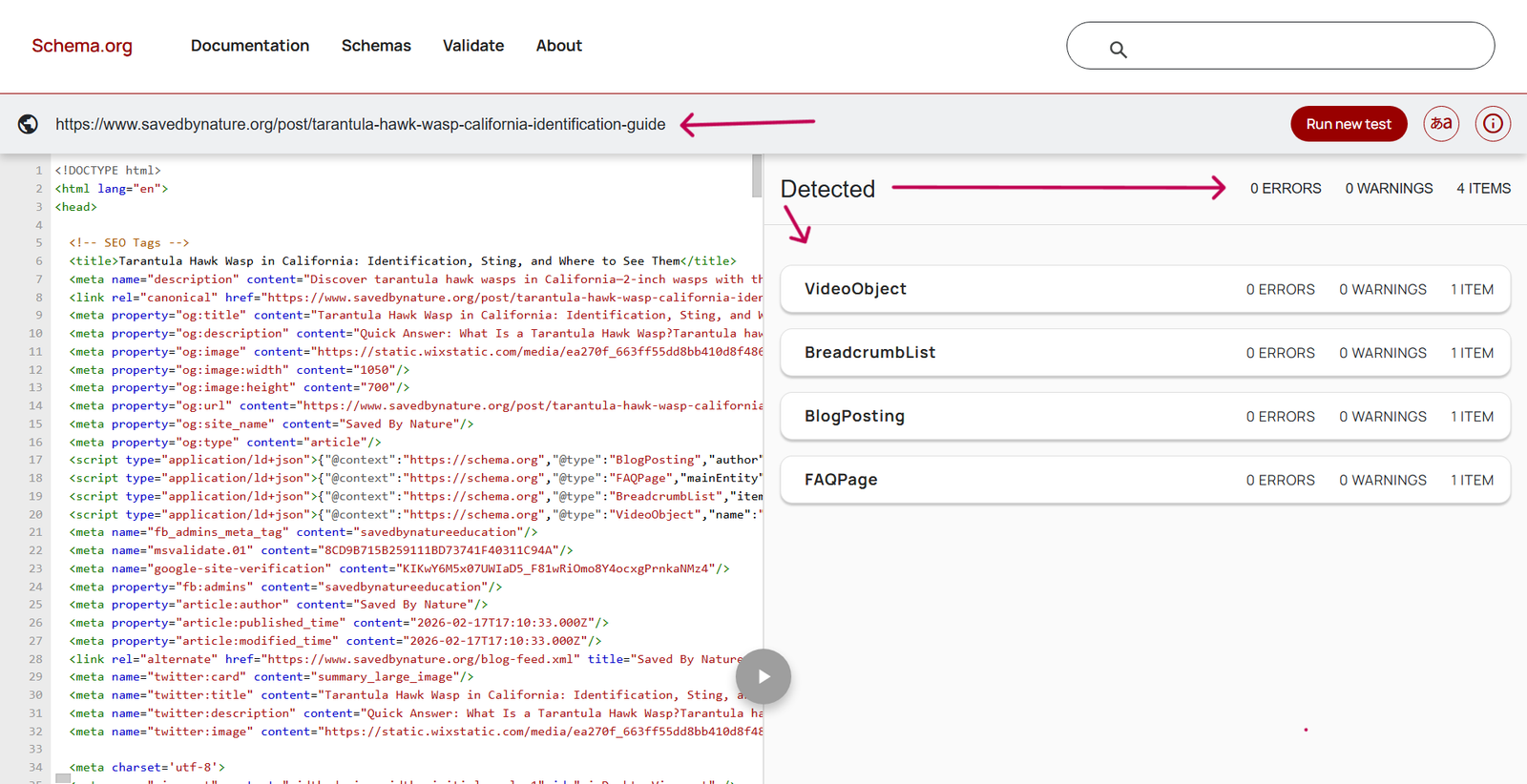
Schema.org’s own validator confirms all four types are implemented correctly, with zero errors and zero warnings.
FAQ Sections & GEO
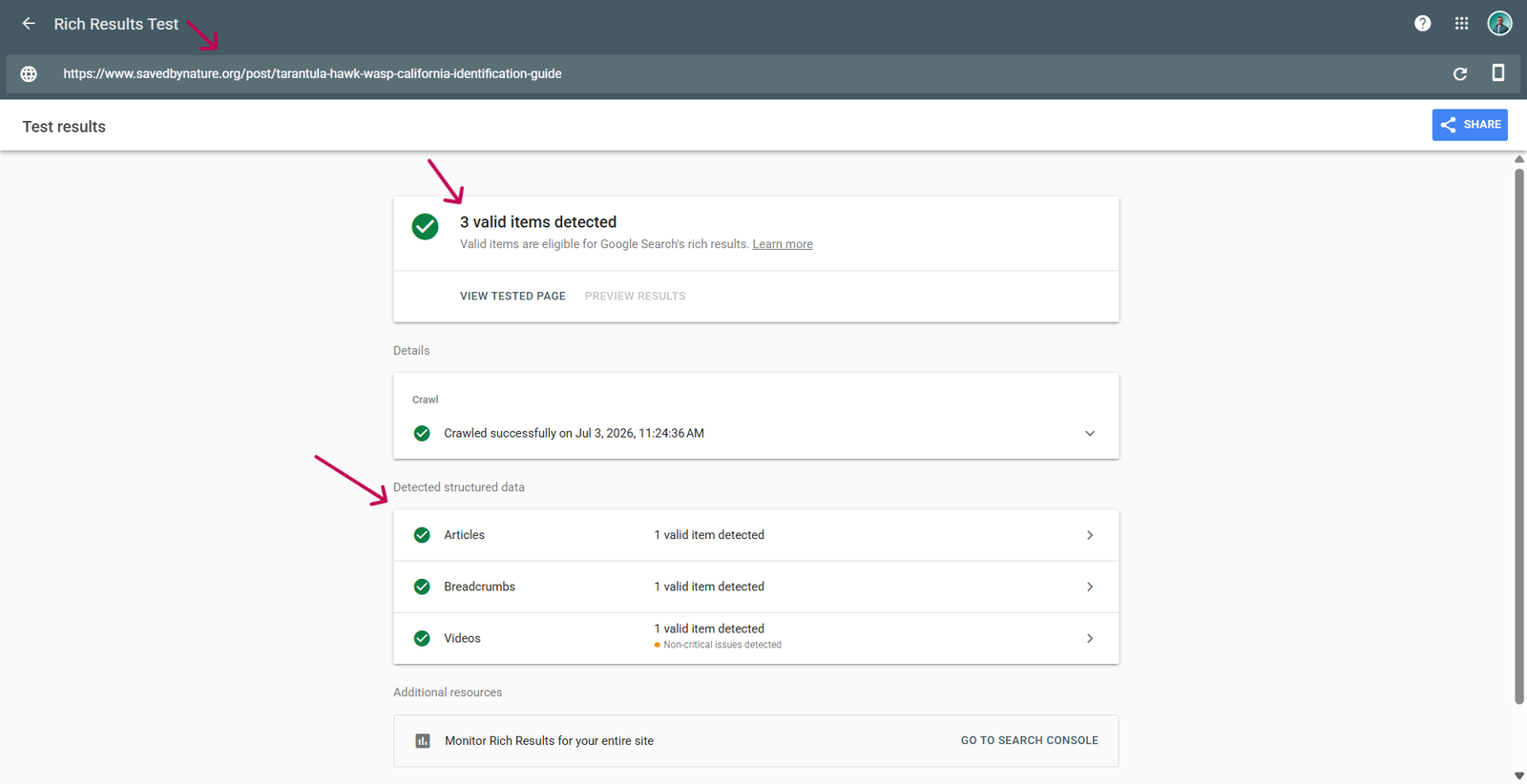
FAQ sections were added to every optimized post to serve three purposes: improving scannability for human readers, improving AI parsability for generative search engines, and triggering Google’s FAQ rich results — at the time of implementation. Google fully deprecated the FAQ rich result feature in May 2026, removing it from search entirely, for every site. The FAQPage schema remains in place and valid; it no longer produces a visible SERP feature, but continues to support AI parsability and GEO visibility.
The Google Rich Results Test for the Tarantula Hawk Wasp guide reflects this directly: three valid items are detected — Articles, Breadcrumbs, and Videos — with FAQ no longer listed as a rich result type. Schema.org’s independent validator (above) confirms the FAQPage markup itself is still fully valid, alongside all three other schema types.
What This Made Possible
Before this work, the blog was a collection of posts with no SEO structure — some ranking by accident, none optimized to rank by design. Treating each post as a search asset, with a defined keyword, complete on-page fundamentals, and validated structured data, gave the blog a foundation to contribute meaningfully to SBN’s organic visibility rather than existing alongside it.
The FAQ additions serve double duty: they improve the experience for readers while making each post more parseable by AI platforms — directly supporting the GEO strategy applied across the rest of the site.