SBN Website Optimization:
Keyword Research, Content Creation & On-Page SEO
Table of Contents
Overview
A rebuilt site with no keyword strategy is just a better-looking target for irrelevant traffic. Before a single word of content was written for the new site, every main page was assigned a specific keyword cluster — mapped using SEMrush and grounded in SEMrush Academy’s keyword mapping methodology. The result was a content architecture designed to maximize keyword reach while minimizing cannibalization between pages.
This page covers the full process: the keyword research methodology, how content was built around each cluster, the on-page SEO fundamentals applied across the site, GEO optimization, and the FAQ sections added to every main page.
| Area | What Was Done |
|---|---|
| Keyword Research | SEMrush keyword research conducted for every main page. |
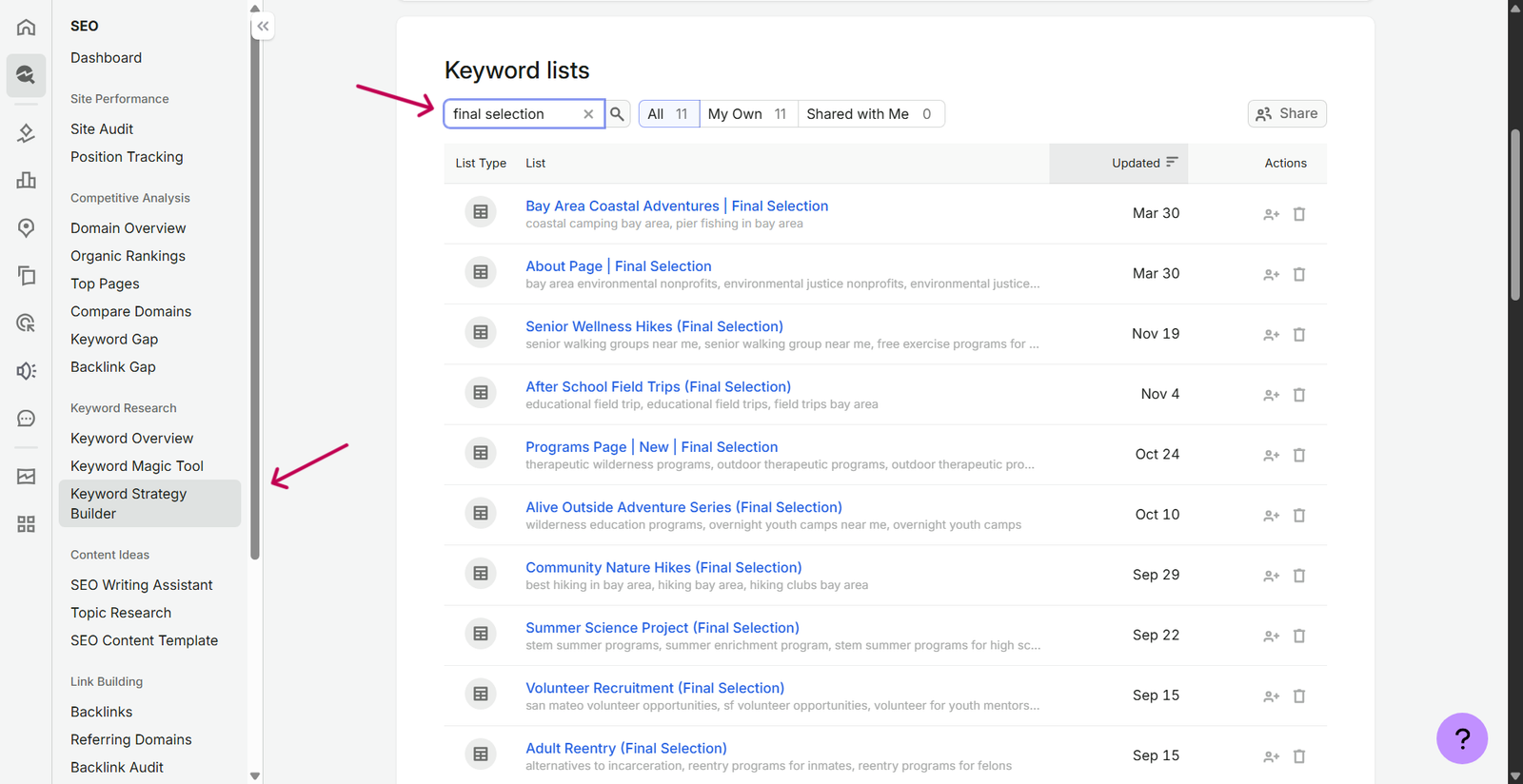
| Keyword Mapping | Clusters mapped to 11 URLs before any content was written. |
| Content Creation | All main page content created from scratch around keyword clusters. |
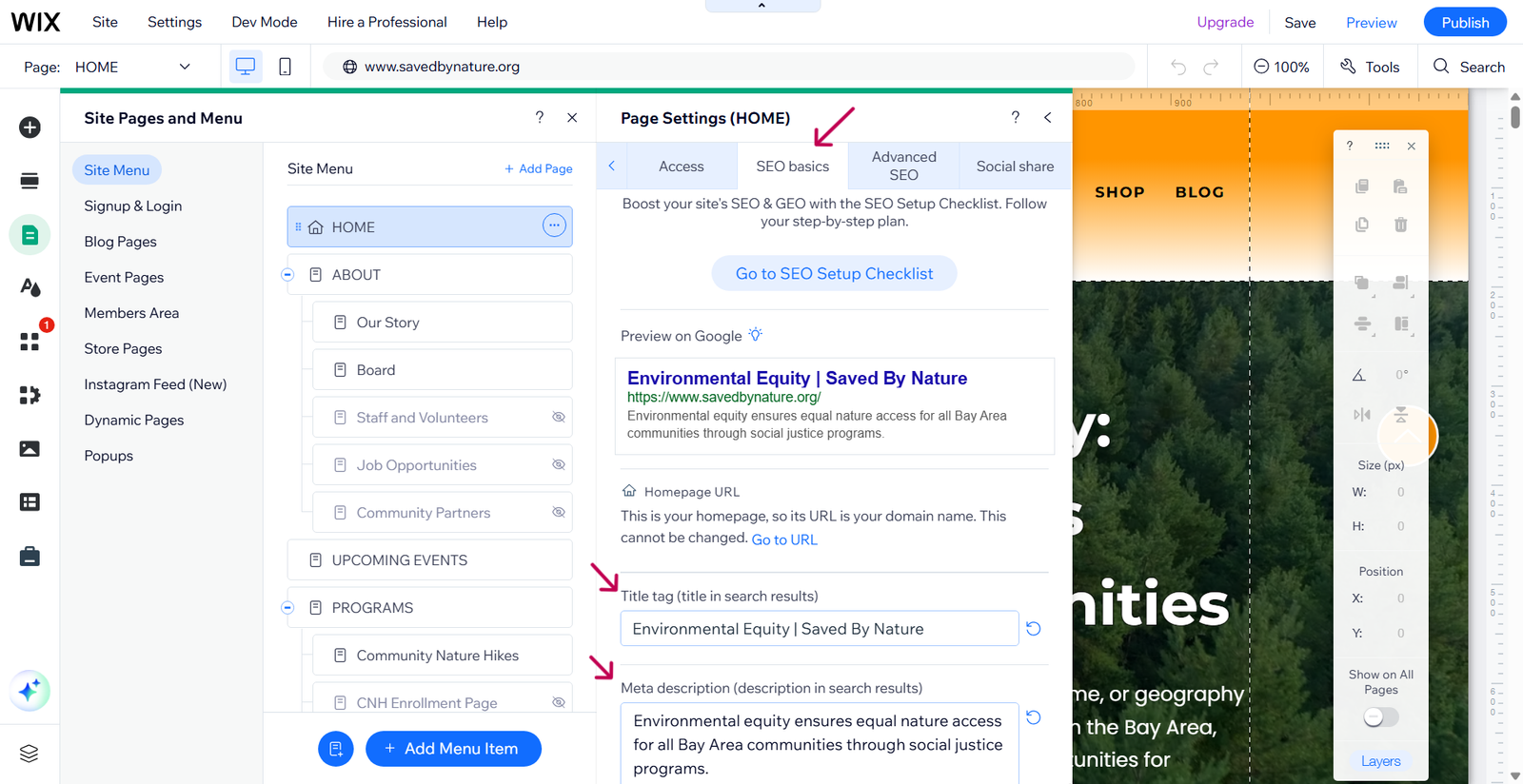
| On-Page SEO Fundamentals | SEO-optimized URLs, title tags, meta descriptions, and internal links across the entire site. |
| GEO Optimization | All main page content optimized for AI-generated overviews. |
| FAQ Sections | FAQ sections added to every main page. |
Keyword Research & Mapping
Methodology
Keyword research was conducted using SEMrush, following the keyword mapping methodology taught in the SEMrush Academy course. The core principle: each main page should own a distinct cluster of related keywords — broad enough to capture meaningful search volume, tight enough to avoid competing against other pages on the same site.
Before any page was built or any content was written, every keyword cluster was mapped into a dedicated spreadsheet. This spreadsheet became the brief for content creation: each page had a defined set of primary and secondary keywords it was built to target.
The goal of this approach:
- Maximum keyword reach — covering the full range of terms SBN’s target audience might use to find its programs.
- Minimum keyword cannibalization — ensuring no two pages competed for the same terms, diluting each other’s ability to rank.
Pages Covered
Keyword mapping was conducted for 11 URLs across the site:
| Page | URL |
|---|---|
| Home | savedbynature.org/ |
| About | savedbynature.org/about |
| Upcoming Events | savedbynature.org/upcoming-events |
| Outdoor Education Programs | savedbynature.org/outdoor-education-programs |
| Community Nature Hikes | savedbynature.org/outdoor-education-programs/community-nature-hikes |
| Senior Wellness Hikes | savedbynature.org/outdoor-education-programs/senior-wellness-hikes |
| Bay Area Coastal Adventures | savedbynature.org/outdoor-education-programs/bay-area-coastal-adventures |
| After School Field Trips | savedbynature.org/outdoor-education-programs/educational-field-trips |
| Summer Science Project | savedbynature.org/outdoor-education-programs/summer-science-project |
| Alive Outside Adventure Series | savedbynature.org/outdoor-education-programs/alive-outside-adventure-series |
| Volunteer Opportunities | savedbynature.org/get-involved/volunteer-opportunities-bay-area |
The Keyword Mapping Spreadsheet
The keyword mapping spreadsheet documents the full cluster strategy across all 11 pages. It is kept private to protect SBN’s target keyword strategy — but hiring managers are welcome to request access.
FAQ Sections
FAQ sections were added to every main page of the site. Rather than writing questions based on assumptions, each FAQ section was built around verified search demand using a two-source research process:
Research Methodology
Step 1 — Google "People Also Ask"
For each page, the primary keyword from that page’s keyword cluster was entered into Google. The “People Also Ask” results were reviewed to identify real questions people are actively searching for in relation to that keyword. The same process was repeated for high-volume secondary keywords in the cluster.

Step 2 — ChatGPT Question Research
The primary keyword was also used to query ChatGPT — asking “What questions do people ask about [keyword]?” — to surface additional questions not always captured in Google’s People Also Ask results.
Step 3 — Question Selection
The most relevant and high-value questions from both sources were then selected and used to build the FAQ section for each page — ensuring every FAQ directly addressed real audience intent rather than assumed questions.
Purpose
Each FAQ section serves the following purposes:
- User value — answering the questions SBN’s audience is most likely to have when they land on each page.
- Search eligibility — making each page eligible for Google Rich Results.
- Topical authority and AI citability — building FAQs around real “People Also Ask” queries and AI-generated question sets signals comprehensive topic coverage to search engines, while the structured Q&A format makes pages more parseable and citable by AI platforms.
Content Creation
Approach
All main page content was created from scratch based on the keyword research conducted for each page. No content from the original site was repurposed — the audit had identified the existing copy as thin, keyword-agnostic, and misaligned with how SBN’s target audience actually searches.
Each page’s content was built around its keyword cluster and written to serve two audiences simultaneously:
- Users — clear, relevant, and readable content that answers the questions people are actually asking.
- Search engines — structured, keyword-informed copy that signals topical authority to Google, Bing, and LLMs.
Pages for Which Content Was Created
| Page | URL |
|---|---|
| Home | savedbynature.org/ |
| About | savedbynature.org/about |
| Outdoor Education Programs | savedbynature.org/outdoor-education-programs |
| Community Nature Hikes | savedbynature.org/outdoor-education-programs/community-nature-hikes |
| Senior Wellness Hikes | savedbynature.org/outdoor-education-programs/senior-wellness-hikes |
| Bay Area Coastal Adventures | savedbynature.org/outdoor-education-programs/bay-area-coastal-adventures |
| Summer Science Project | savedbynature.org/outdoor-education-programs/summer-science-project |
| After School Field Trips | savedbynature.org/outdoor-education-programs/educational-field-trips |
| Alive Outside Adventure Series | savedbynature.org/outdoor-education-programs/alive-outside-adventure-series |
| Get Involved | savedbynature.org/get-involved |
| Volunteer Opportunities | savedbynature.org/get-involved/volunteer-opportunities-bay-area |
On-Page SEO Fundamentals
On-page SEO fundamentals were applied consistently across every main page:
- SEO-optimized URLs/slugs — clean, descriptive, keyword-informed.
- SEO-optimized title tags — unique per page, aligned to each page’s primary keyword cluster.
- SEO-optimized meta descriptions — written to drive click-through from search results, not just to satisfy a field.
- Keyword placement in headings and body copy — target keywords were incorporated naturally into each page’s H1 and subheadings, as well as throughout the body text, with semantic variations used across each page to reinforce topical relevance without keyword stuffing.
- Extensive internal linking — links added throughout the entire site to improve crawlability, distribute link equity, and support user navigation between related pages.
Generative Engine Optimization
All main page content was optimized not just for traditional search, but for GEO — Generative Engine Optimization. This means structuring content so that AI platforms (Google AI Overviews, Copilot, ChatGPT, Perplexity, Claude, etc.) can accurately surface and cite SBN’s programs in AI-generated responses.
GEO optimization shaped content in several ways:
- Clear, factual statements about what each program offers, who it’s for, and where it operates.
- Explicit answers to the questions most likely to be asked by people searching for programs like SBN’s.
- Structured content that AI models can parse and cite with confidence.
The impact is visible in the results: SBN’s programs now surface in AI-generated overviews across multiple platforms, and enrollments attributed to Google AI Overview, ChatGPT, and Perplexity confirm that visibility is converting to action.
What This Made Possible
The keyword mapping and content strategy built in this phase became the foundation for everything that followed. Without it:
- Technical SEO improvements would have optimized pages with no clear search intent.
- New pages and enrollment pathways would have had weak organic discovery.
- GEO optimization would have had no structured, citable content to work with.